
Epoxy resin is valued for strong adhesion, durable protective surfaces, resistance to selected chemicals and moisture, and the ability to be formulated for different finishes and applications. Those benefits depend on the resin, hardener, substrate and installation conditions. For floors, coatings, adhesives or composites, choose a complete system specified for the job rather than assuming any epoxy will perform the same way.
What Is Epoxy Resin and Why Is It Useful?
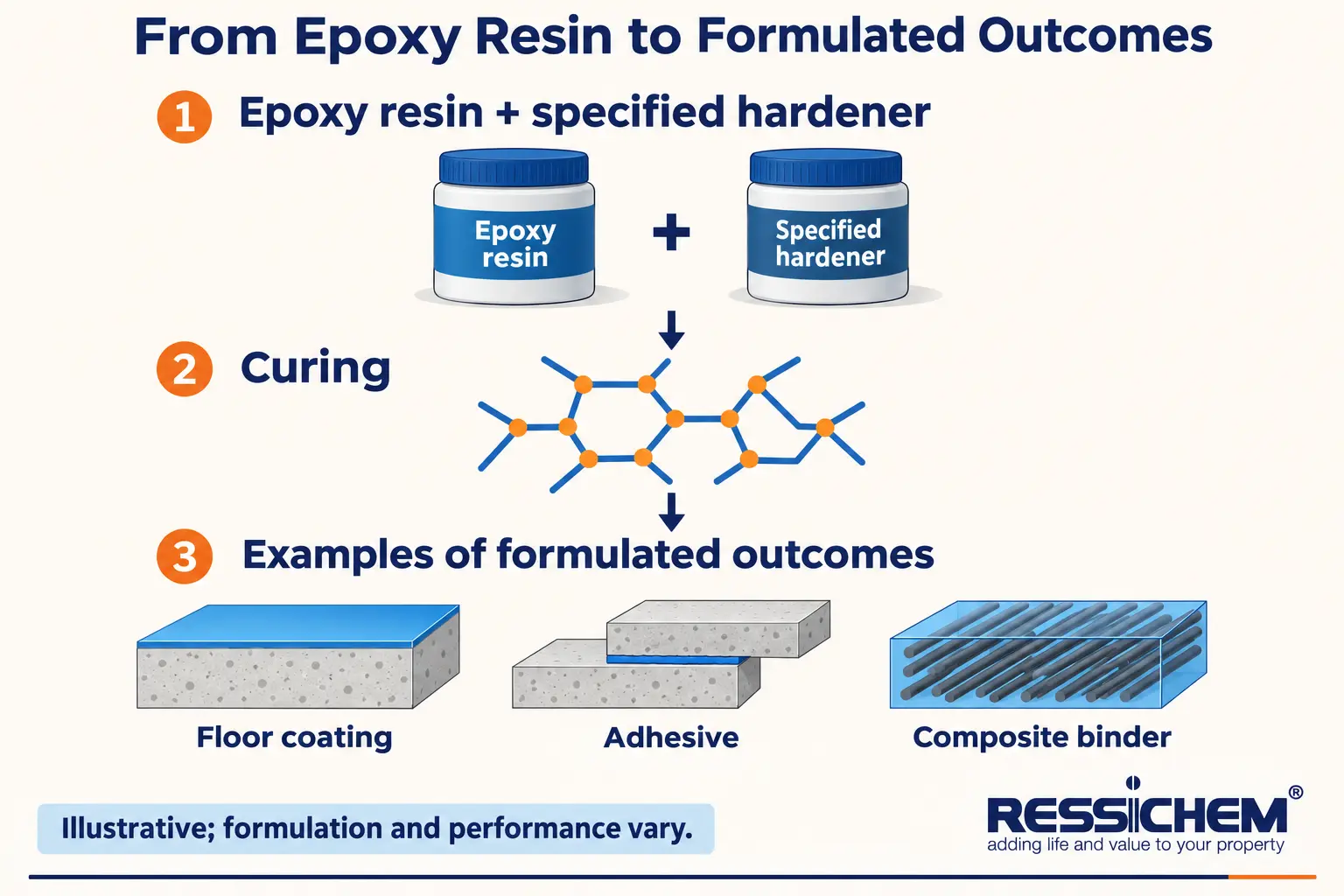
Epoxy resins are a family of materials that react with a suitable hardener to form a cured thermoset. The resulting properties can be tailored through the resin, curing agent and formulation. This is why an epoxy floor coating, a bonding adhesive and a resin for composite manufacture may all use epoxy chemistry while serving very different purposes.
The American Chemistry Council’s epoxy resin overview describes uses across construction, coatings, adhesives and other industries.
For a buyer, the useful distinction is between a resin component and a formulated system. A resin alone is not automatically a ready-to-use waterproof coating or floor finish. Confirm the compatible hardener, mixing ratio, primer and any topcoat in the supplier’s technical data sheet.
What Are the Main Benefits of Epoxy Resin?
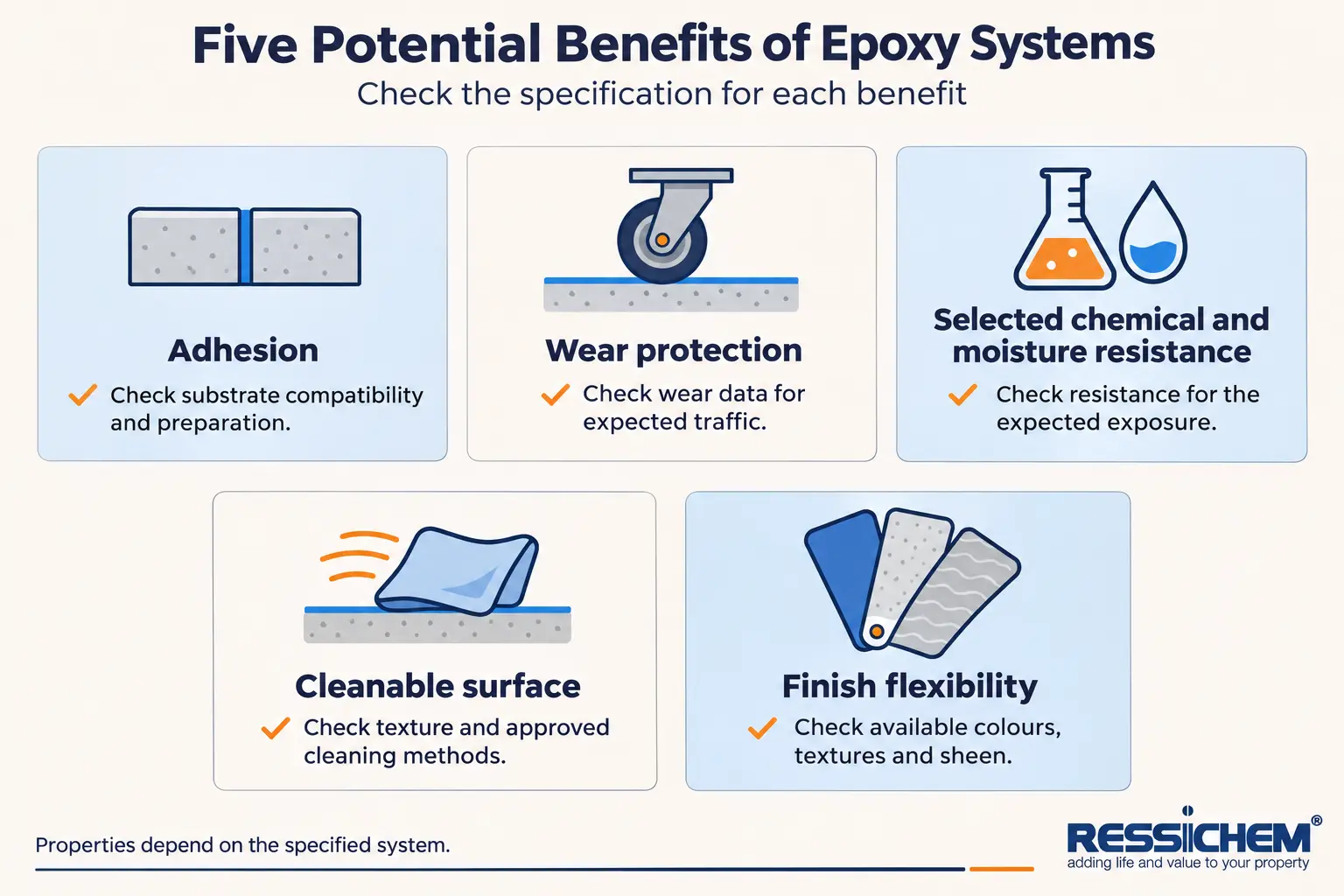
The main advantages are adhesion, mechanical durability, resistance tailored to a particular exposure, easy-to-clean finishes and formulation flexibility. None is universal: performance depends on the complete product system and how it is applied.
1. Strong adhesion on suitable prepared surfaces
Purpose-made epoxy adhesives and coatings can bond well to compatible concrete, metal, wood and other substrates. In a floor system, that bond helps the finish stay attached under its intended service conditions. The substrate must be sound, clean and properly prepared; an epoxy layer cannot make weak or contaminated concrete structurally sound.
2. Durable protection against wear and use
Cured epoxy systems can form hard, durable surfaces for floors, equipment and components. This makes them useful where traffic, abrasion or handling would quickly damage an unprotected surface. Specify the expected loading, impact and maintenance conditions: a thin coating and a heavy-duty flooring build-up are different systems.
3. Resistance to selected chemicals and moisture
An appropriately specified epoxy coating can help protect a substrate against particular spills, cleaning agents and water exposure. Chemical resistance varies by formulation, concentration, contact time and temperature; check the product’s resistance data for the substances actually present. A continuous coating can resist liquid at the surface, but joints, cracks, edges and moisture rising through concrete need their own design.
4. Easier routine cleaning
A smooth, continuous epoxy floor has fewer open joints and pores than many unfinished surfaces, so routine sweeping and washing can be straightforward. Cleaning method and chemical choice still matter. In wet work areas, a smooth finish may become slippery, and a specified texture or slip-resistant aggregate may be necessary.
5. A range of finishes and formulations
Epoxy systems can be formulated as clear or pigmented coatings, primers, adhesives, grouts, casting resins and composite binders. Decorative floor systems can use colour or aggregate to change the appearance. The visual result, working time and service performance come from the selected formulation, not from the word “epoxy” alone.
Where Is Epoxy Resin Used?
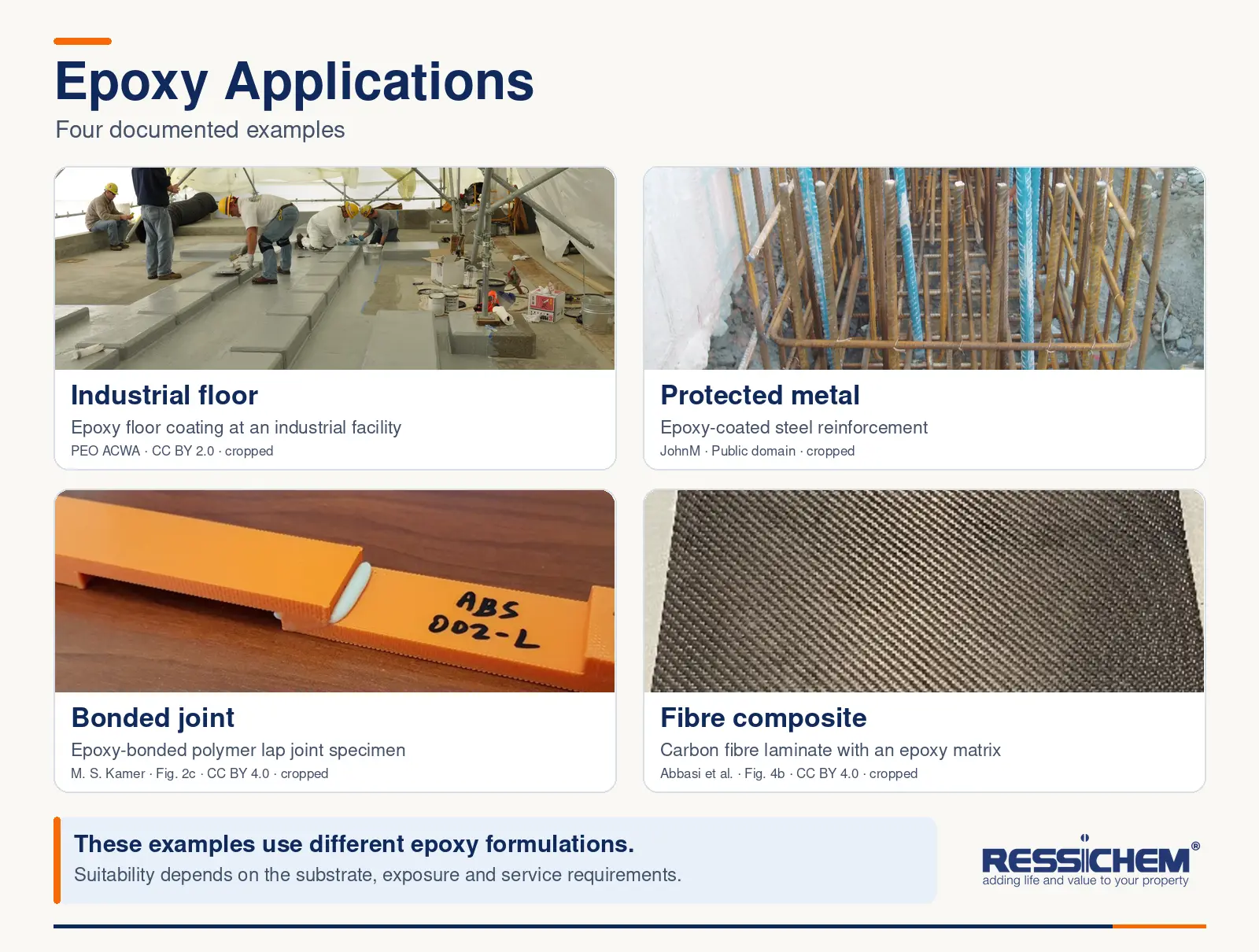
Epoxy resin is used in flooring and protective coatings, adhesives and repairs, industrial components, and composite materials. The grade and system should match the application.
Floors and protective coatings
Factories, warehouses, workshops and other commercial spaces may use epoxy-based floor systems when a durable, cleanable finish is required. A project can call for primers, build coats, aggregates and a finish coat. Ressichem’s epoxy flooring and coatings range contains different system components; select the build-up around the substrate, traffic and exposure rather than treating a can of resin as a complete floor.
Adhesives, grouts and repairs
Formulated epoxy adhesives and grouts are used where bonding or filling performance is specified. The joint, substrate, load and chemical exposure determine the product. An adhesive grade, an anchoring grout and a crack filler are not interchangeable just because each contains epoxy.
Composites and industrial formulations
Epoxy can also serve as a binder in fibre-reinforced composites or as a protective material in electrical and industrial applications. These uses call for their own resin and hardener properties. If you need the broader chemistry and product families, see Ressichem’s guide to epoxy resin types and uses.
What Are the Disadvantages and Limits of Epoxy Resin?
Epoxy’s strengths come with practical constraints. A suitable product may still fail if the surface is damp or poorly prepared, the components are mixed incorrectly, or the service exposure exceeds its specification.
Preparation, moisture and application time
Concrete flooring needs an assessment of substrate condition and moisture, followed by the surface preparation required by the selected system. Incorrect mixing or application outside the working time can leave weak or uneven areas. Sherwin-Williams’ epoxy flooring guide identifies preparation and on-site mixing as critical installation factors. Follow the chosen manufacturer’s data sheet for temperatures, ratios, pot life and cure before use.
UV exposure, movement and slip resistance
Some epoxy finishes discolour or yellow in direct sunlight; exterior or light-sensitive work needs a product or protective finish approved for the exposure. A rigid coating can also reflect movement or cracking in the substrate. Smooth floors may be slippery when wet, so specify suitable texture and joint details where required.
Handling uncured materials
Uncured resins and hardeners can irritate or sensitize skin. Use the product safety data sheet for ventilation, protective equipment, mixing and disposal requirements. Avoid bare-skin contact during application.
Is Epoxy Resin Waterproof?
A correctly formulated and applied epoxy system can resist liquid water and provide a protective barrier in its specified use. That does not make every epoxy product a complete waterproofing solution. Leaks can still arise through joints, cracks, penetrations or a failed bond, while moisture vapour from below a concrete slab can damage some floor systems. Check the substrate and exposure, and use a complete design intended for the location.
How Do You Choose the Right Epoxy System?
Start with the job: are you bonding, casting, coating a floor, protecting metal or making a composite? Then record the substrate, expected traffic or load, chemicals, water and UV exposure, appearance, and available installation conditions. Ask for a compatible resin and hardener, the required preparation and layers, and the technical data sheet. Compare total system requirements rather than resin price alone.
Explore Ressichem’s epoxy resins for resin and hardener selection, or its epoxy floorings and coatings for a specified floor system. For pack-size buying questions in Pakistan, the separate 1 kg and 5 kg epoxy resin guides explain what to compare. Contact Ressichem with the application and exposure details to identify a suitable product range.
Epoxy resin ke kya faide hain?
Epoxy resin can provide strong adhesion, a durable finish, resistance to selected chemicals and moisture, and a surface that is easier to clean. It is used in flooring, protective coatings, adhesives and composites. The benefit depends on the formulation and application: a resin alone is not a complete flooring or waterproofing system.
Frequently Asked Questions
What are the advantages and disadvantages of epoxy resin?
Advantages include adhesion, durable finishes, selected chemical and moisture resistance, and design flexibility. Disadvantages include demanding surface preparation, limited working time after mixing, potential UV discolouration and sensitivity to unsuitable substrate moisture. The balance depends on the formulation and job.
Is epoxy resin 100% waterproof?
A specified, continuous epoxy system can be highly resistant to liquid water, but a resin alone is not a guarantee against leaks. Joints, movement, penetrations and moisture from beneath a substrate must be addressed by the full system design.
How long will epoxy resin last?
There is no single lifespan for all epoxy resins. A cast piece, adhesive bond and factory floor have different demands. Service life depends on formulation, surface preparation, exposure, installation and maintenance; use the supplier’s performance data and project specification for a meaningful estimate.