Epoxy flooring can be a practical choice for industrial use when the system is matched to the concrete, traffic, spills and cleaning routine. A warehouse aisle, manufacturing area and pharmaceutical production room do not need the same floor build-up. This guide explains where industrial epoxy flooring can help, where its limits matter, and what to check before selecting a system in Pakistan.
What Is Industrial Epoxy Flooring?
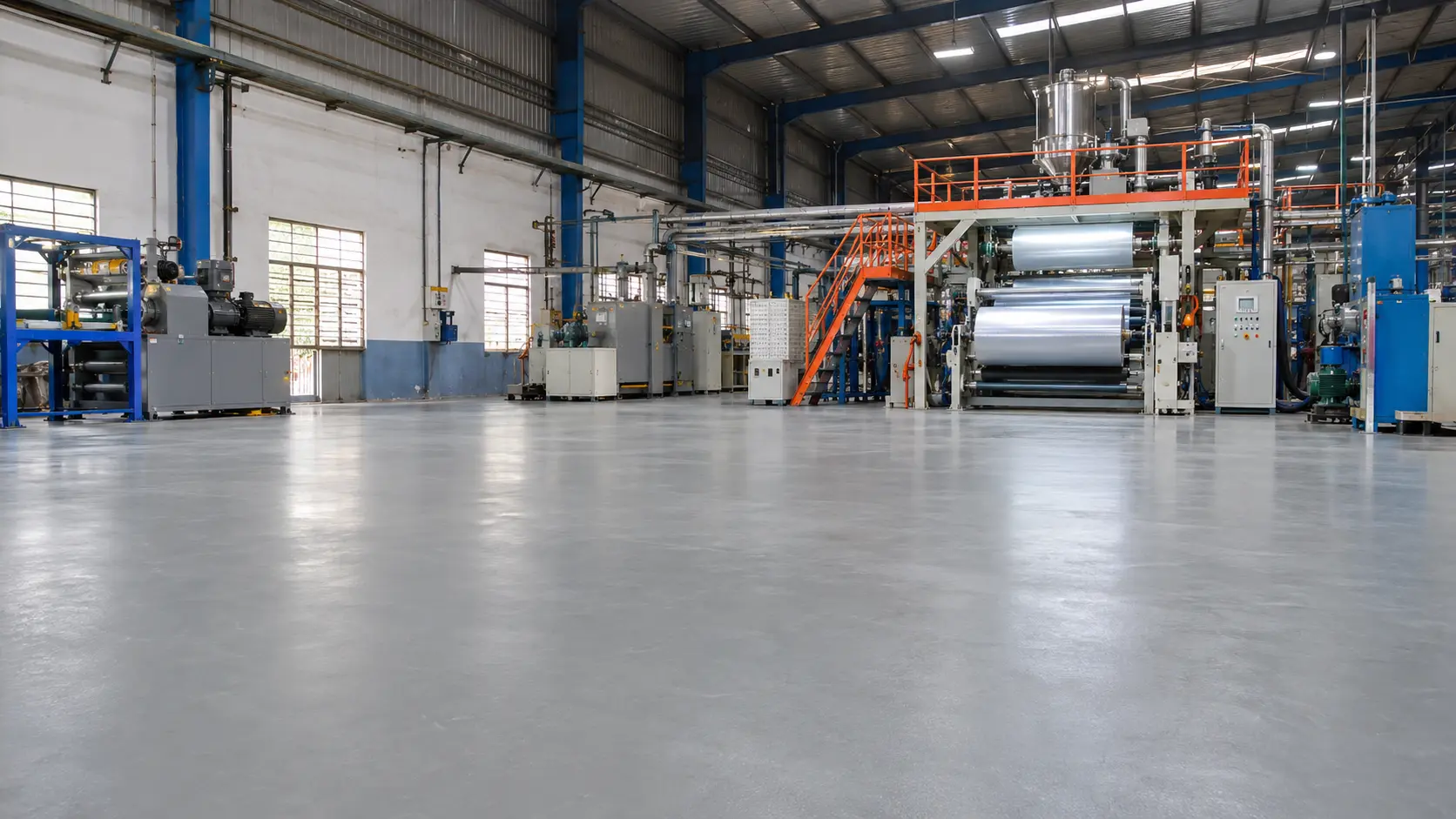
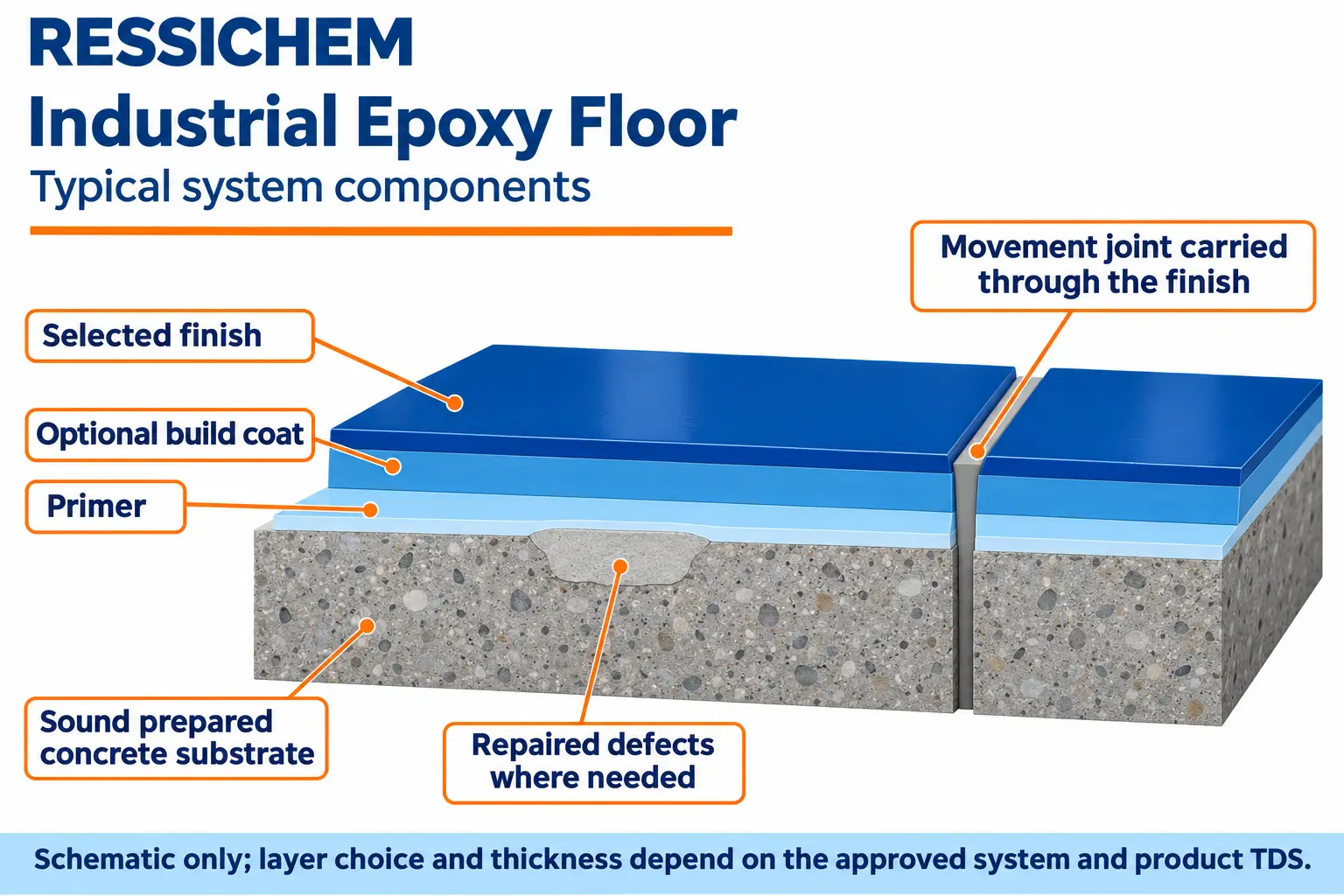
Industrial epoxy flooring is a resin-based floor system applied to a suitably prepared substrate, usually concrete. Depending on the specification, the system can include crack repair, a primer, a build coat and a finish. Resin and hardener cure to form the selected wearing surface; the result depends on the particular products, layer build, installation conditions and condition of the concrete beneath them.
“Industrial epoxy flooring” does not describe one universal thickness or performance grade. A coating for a lightly used production area and a high-build system for frequent wheeled traffic can look similar in a photograph while serving different demands. Start with what happens on the floor, then choose the system.
Why Do Industrial Facilities Consider Epoxy Flooring?
Protection against routine wear
An appropriately specified epoxy system can protect prepared concrete from the abrasion associated with everyday foot and wheeled traffic. The traffic pattern matters: turning forklifts, concentrated loads and repeated impact can be more demanding than occasional straight-line movement. Confirm the proposed system against the expected duty rather than assuming any epoxy coating will handle heavy equipment.
A floor that supports cleaning
A well-finished epoxy surface can be easier to clean than damaged or dusting concrete. That benefit depends on the installed finish, joints and details, and a maintenance procedure suited to the facility. Pharmaceutical or food-related areas may have additional project requirements; a cleanable floor on its own does not certify a controlled environment.
Resistance matched to actual spills
Industrial floors may encounter oils, cleaning agents or process chemicals. Epoxy products vary in their resistance to these substances, and performance can depend on concentration, temperature and contact time. List the materials the floor may encounter and check the selected product’s technical data before specifying it.
Finish, markings and traction
Colour and floor markings can distinguish walkways or working zones. Where a floor may be wet or contaminated, the finish must also be assessed for the required traction. A smooth gloss finish should not be described as slip-resistant without a suitable specification and evidence.
Maintenance and life-cycle considerations
An industrial floor’s value depends on how long the selected system performs under its actual conditions, as well as preparation, installation, access and maintenance. Compare complete specifications rather than assuming epoxy is always the lowest-cost option or that every industrial floor will last for the same period.
When Might a Standard Epoxy System Be the Wrong Fit?
Epoxy is one possible flooring route, not an automatic answer for every industrial area. Persistent substrate moisture can affect adhesion. Hot washdowns, rapid temperature changes, aggressive chemicals, outdoor UV exposure or severe impact may call for a different formulation or another flooring system. The project team should assess these conditions before selecting materials.
This is particularly important when one facility contains several zones. A dry packaging room, a wet process area and a forklift route can require different finishes and layer builds even within the same building.
Where Is Epoxy Flooring Used in Industry?
Industrial applications can include manufacturing areas, workshops, warehouses, logistics facilities, laboratories and selected healthcare or pharmaceutical spaces. The relevant question is not whether epoxy can be used in an industry in general; it is whether a particular system fits the exposure and operating demands of a particular area.
For traffic and loading decisions in storage and production spaces, read Ressichem’s factory and warehouse guide. For a specified production-zone build-up, see the pharmaceutical and hospital flooring system. Ressichem’s epoxy flooring solutions hub groups further systems by application and duty.
How to Choose an Epoxy System for Industrial Use
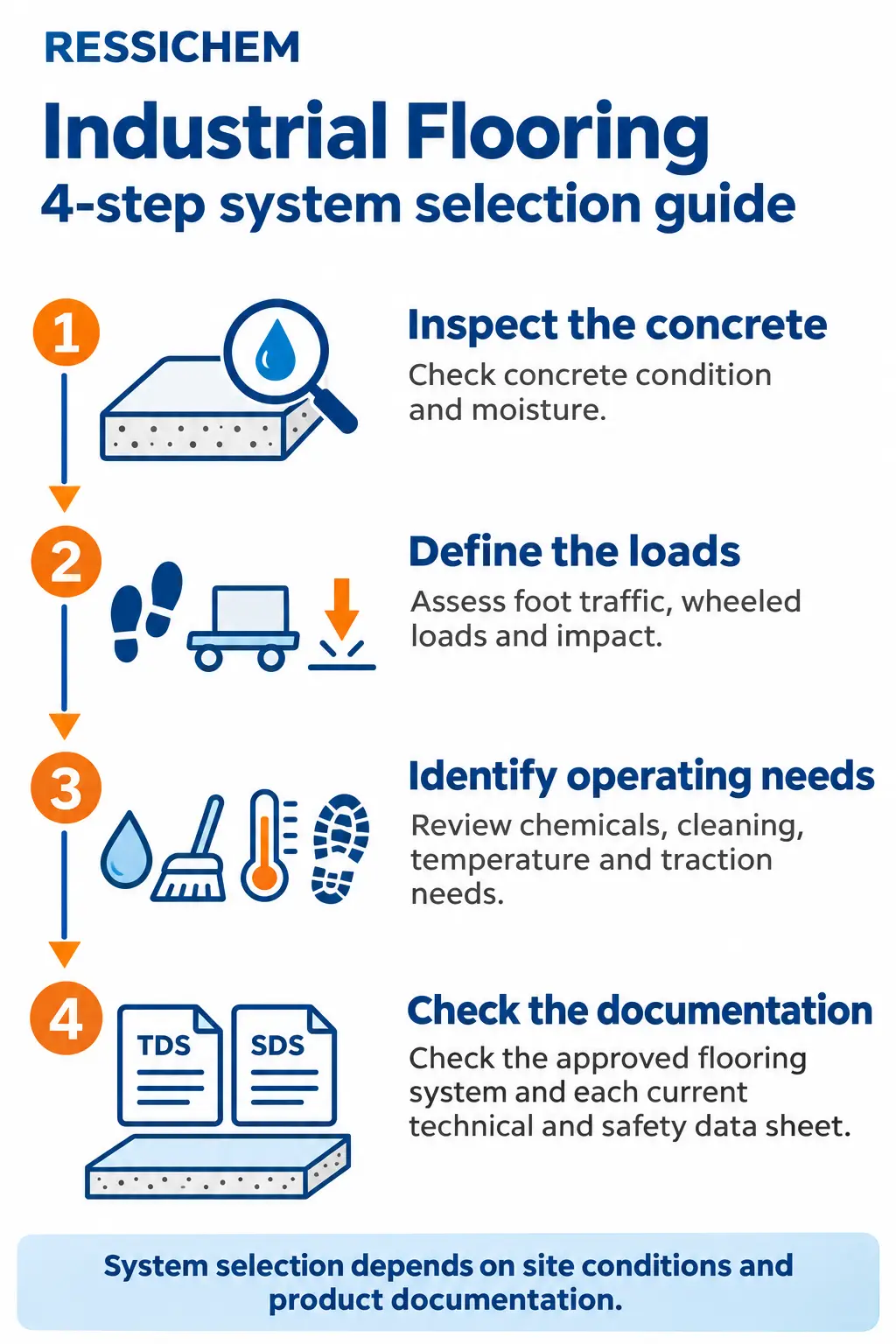
1. Inspect the concrete
Check whether the slab is sound, suitably dry and free from contamination or failing coatings. Cracks, weak concrete and moisture issues need assessment before a primer or finish is chosen. Ressichem’s concrete preparation guide explains the principal checks in more detail.
2. Define traffic and loading
Document foot traffic, pallet trucks, forklifts, stationary equipment, turning areas and likely impacts. A zone with occasional pedestrian use should not automatically receive the same build-up as a heavily trafficked route.
3. Identify liquids and cleaning methods
Record the actual chemicals, oils, water exposure and cleaning agents, including how often and how long they contact the floor. Also decide whether the finish requires texture or floor markings. These requirements guide product selection and maintenance.
4. Review the complete system
Check compatibility between preparation materials, primer, build coats and finish. Confirm application conditions, layer build, coverage, overcoating and curing from current product technical data sheets. A product name alone does not establish the performance of the finished floor.
Ressichem Products That May Form Part of an Industrial Floor
Ressichem offers different products for different roles. The examples below illustrate why a compatible system is selected for the site rather than choosing one coating from a list.
Ressi EPO Primer LV
Ressi EPO Primer LV is a low-viscosity, solvent-free primer for concrete and cementitious surfaces before suitable epoxy flooring and coating systems. Its product information lists factory floors, warehouses and pharmaceutical plants among typical applications. The complete build-up still requires selection of compatible subsequent layers.
Ressi EPO Tough Might

Ressi EPO Tough Might is described by Ressichem as a two-component flooring product for heavy-duty, abrasion- and impact-resistant applications. Check its current technical data against the site’s loads and application conditions before specifying it.
Ressi EPO Chem Might

The Ressi EPO Chem Might technical datasheet describes a floor coating intended for areas requiring greater chemical resistance. Match that selection to the actual substances and exposure conditions at the facility; “chemical resistant” is not a blanket claim for every spill.
Ressi EPO Gloss Might

Ressi EPO Gloss Might is a two-component high-gloss flooring product. Use its technical datasheet to assess the proposed finish, application and compatibility with the rest of the system.
Browse Ressichem’s epoxy floorings and coatings category for the broader range. Product pages and technical data sheets should govern any final application specification.
How Is an Industrial Epoxy Floor Installed?
Installation follows the approved system and the product instructions. The usual sequence is to assess the substrate, prepare and repair the concrete, apply the specified primer and flooring layers, and allow each stage to meet its overcoating or curing requirements. Temperature and site conditions affect working and curing times, so the contractor should follow the current technical data sheets rather than a generic schedule.
After installation, use the facility’s approved cleaning procedure, remove spills promptly and inspect traffic routes, edges and joints for damage. Maintenance is part of keeping the selected floor fit for its intended use.
Choosing the Right Industrial Epoxy Floor
Epoxy flooring for industrial use can provide a durable, cleanable surface when the substrate and complete floor system are suited to the facility. Begin with concrete condition, traffic, exposure and maintenance needs. Then review Ressichem’s application-specific flooring systems and product documentation to select a build-up for each area.