
Epoxy flooring safety in industrial workplaces depends on the finish and the conditions it faces, not the resin name alone. A well-specified floor can support traction, cleaning and clear traffic routes, while spills, wear and poor maintenance can still create hazards.
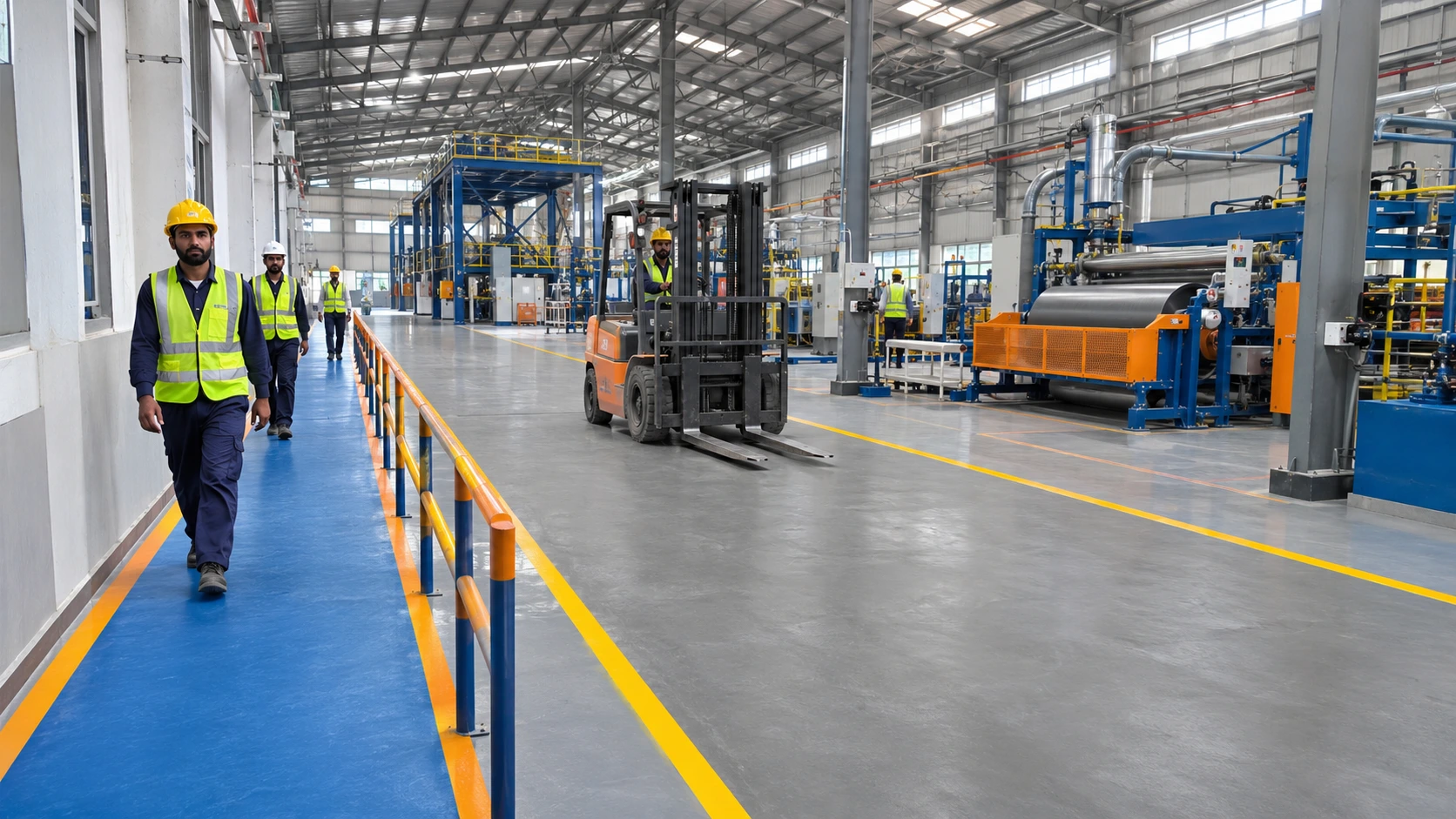
Begin with the hazards on the floor
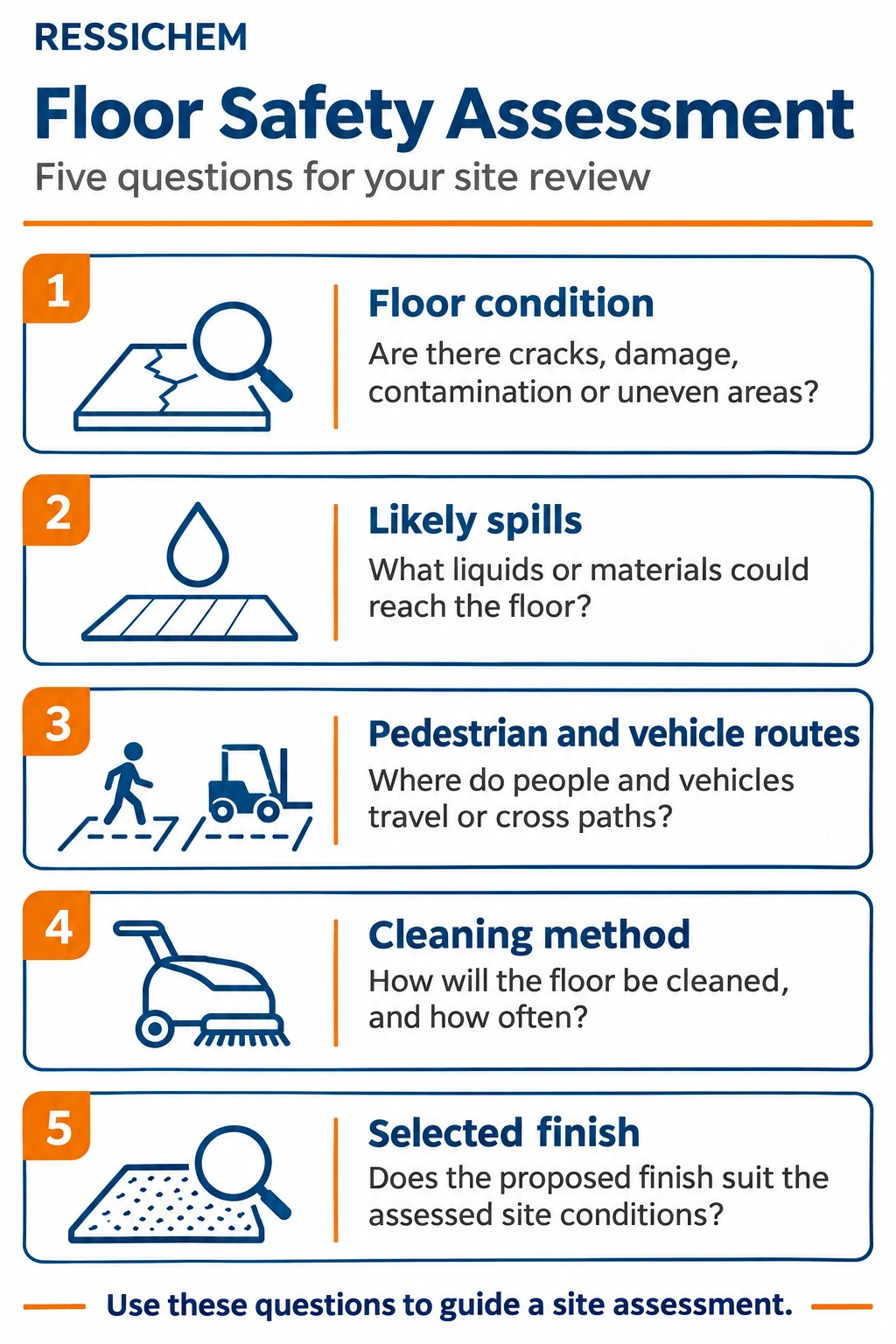
Industrial floor safety starts with what people and equipment encounter each day. Is a walkway normally dry, frequently washed or exposed to oil? Do workers cross forklift routes? Are there cracks, uneven transitions, worn patches or spills that persist between cleaning rounds?
Those answers determine whether a particular floor system and finish are suitable. Workplace guidance on floor and ground surfaces explains that slip risk changes with contaminants, footwear, tasks and cleaning methods. A finish that provides grip when dry may behave differently when wet.
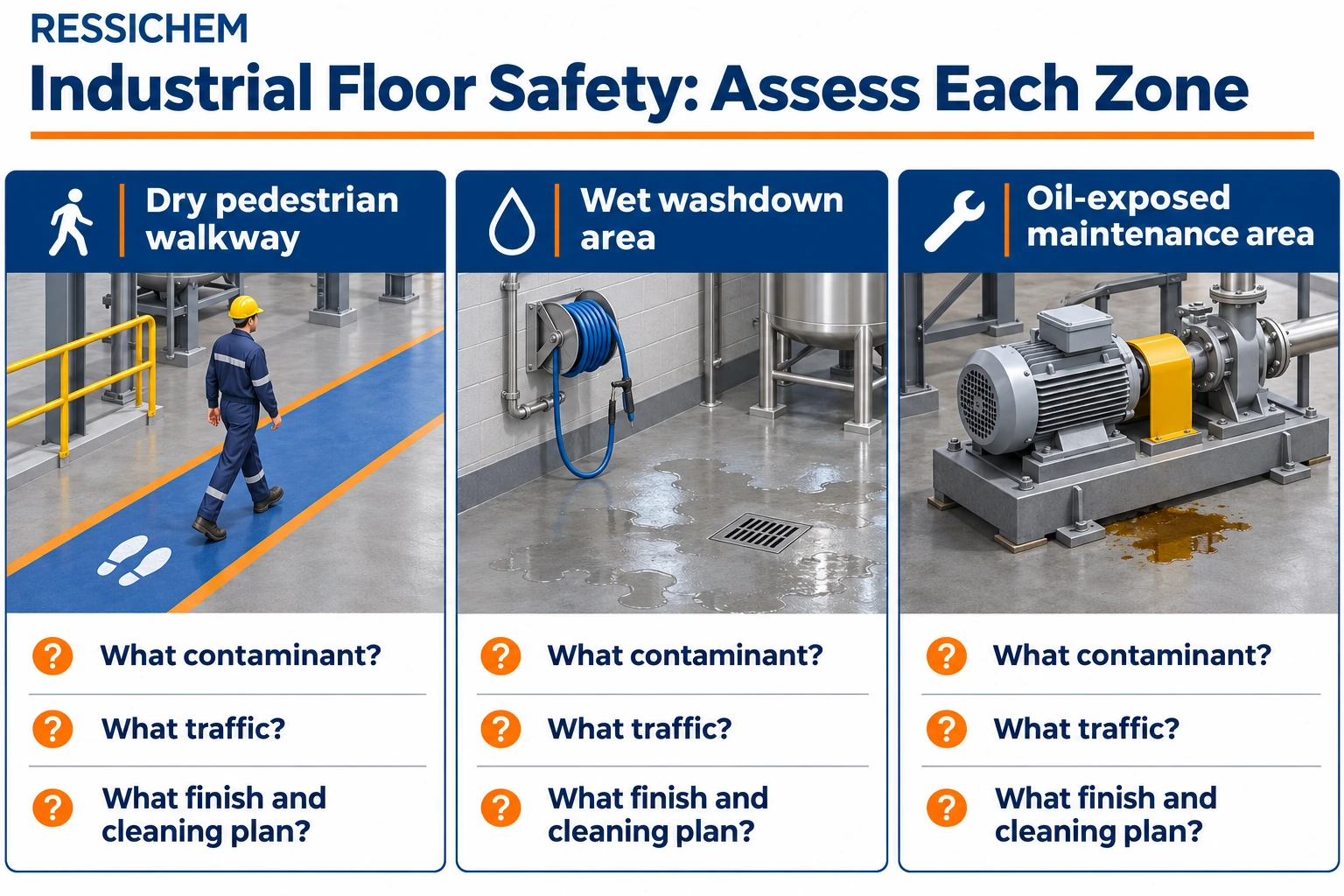
Make a short zone-by-zone record before specifying the floor: typical contaminants, foot and wheeled traffic, cleaning method, existing concrete condition and how quickly spills can be removed. This also makes it easier to revisit the specification when operations change.
How can epoxy flooring support a safer workplace?
Traction matched to the environment
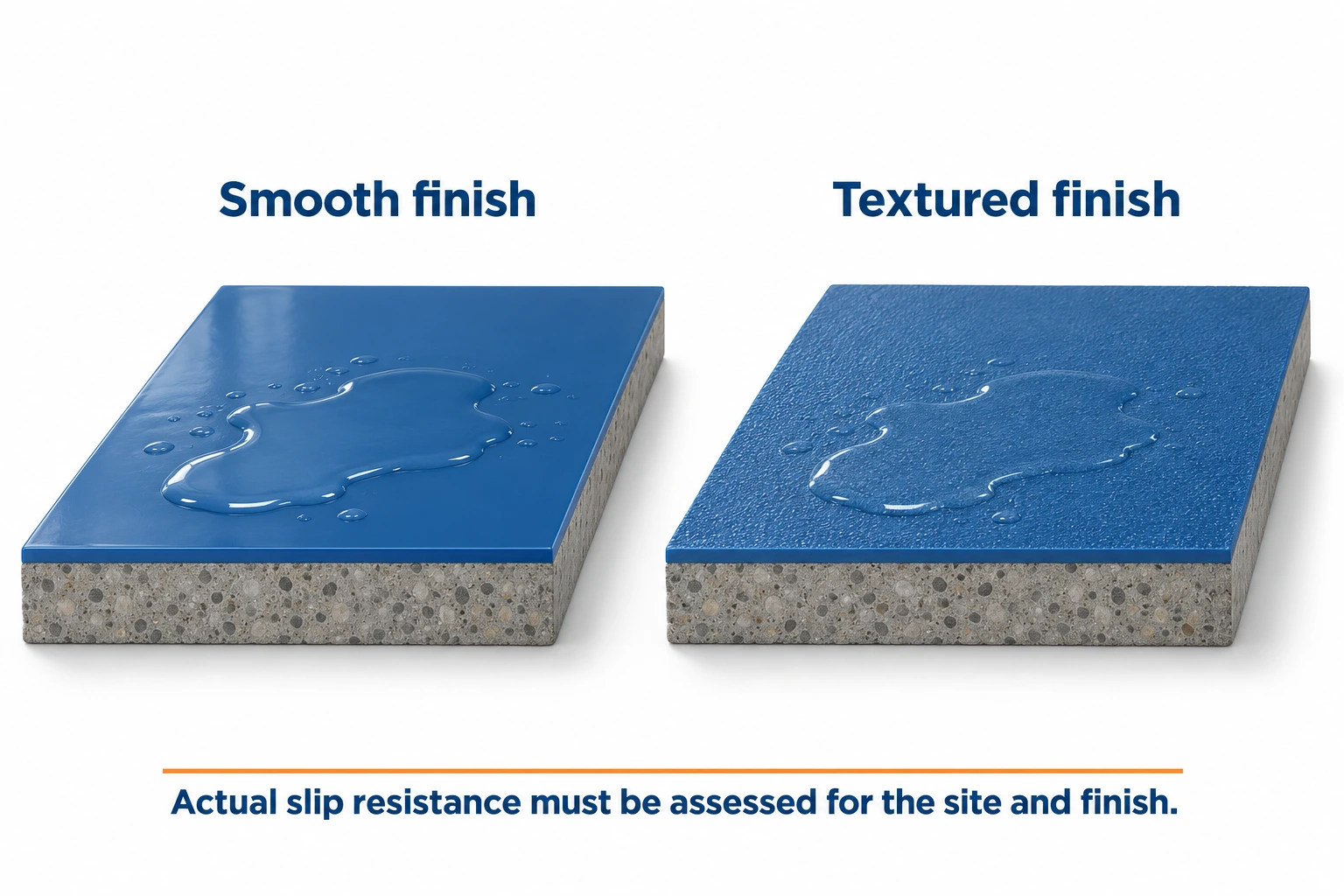
A smooth, glossy epoxy surface can become slippery when wet or oily. For areas where contamination is likely, a textured finish or a compatible aggregate in the specified system may improve traction. The required profile depends on the contaminant, footwear, traffic and cleaning process. More texture can also change how easily the floor is cleaned, so both needs should be considered together.
Do not describe every epoxy coating as “non-slip.” Ask for relevant slip-resistance information for the proposed finish and the conditions in which it will be used. The surface must also be kept clean and inspected as it wears.
Clear routes and visible work zones
Colour contrast and floor markings can help distinguish pedestrian walkways, vehicle lanes, storage areas and restricted zones. These markings should fit the facility’s traffic plan and remain visible after routine cleaning and wear.
A marked route is useful only when people can follow it: equipment placement, line of sight, supervision and traffic rules still matter. Flooring supports that plan; it does not replace it.
A surface that supports housekeeping
A suitably installed, intact epoxy finish may be easier to clean than dusty or deteriorating concrete. Prompt spill removal and a cleaning method suited to the finish help keep contaminants from becoming slip hazards. Joints, drains, edges and damaged patches still need attention; a coating does not remove every point where water or debris can collect.
Protection of the concrete beneath
A compatible epoxy system can protect prepared concrete against some traffic and process exposures. Resistance varies by product and complete build-up. Repeated wheel turning, impact, chemicals or moisture from the slab can challenge a floor that was selected only for its appearance. Repair defects and assess the substrate before installation, then check the proposed system against actual site loads and spills.
Is an epoxy floor safe when wet or oily?
It can be specified to address a wet or oily area, but epoxy itself does not guarantee safe footing. The floor’s texture, contaminant, footwear and cleaning routine all affect the result. Some areas may need a different finish or flooring system after a site assessment.
Where a spill is foreseeable, plan for both the flooring surface and spill control. Identify the substance, its likely amount and how long it may remain on the floor. Review the proposed finish with the supplier and contractor, and confirm any required slip-resistance testing against the facility’s project specification.
Where does operational efficiency fit in?
Safety and daily work often depend on the same practical details. A floor that is easier to clean may support a more predictable housekeeping routine. Clearly planned routes can help staff recognize where to walk or move equipment. Addressing damaged concrete before it becomes a larger maintenance issue can also help keep work areas usable.
These are possible operational benefits, not automatic results of applying epoxy. Cleaning time, access restrictions, repair frequency and floor life depend on the site, installation and maintenance. Compare the complete floor specification and planned downtime before making a cost or productivity claim.
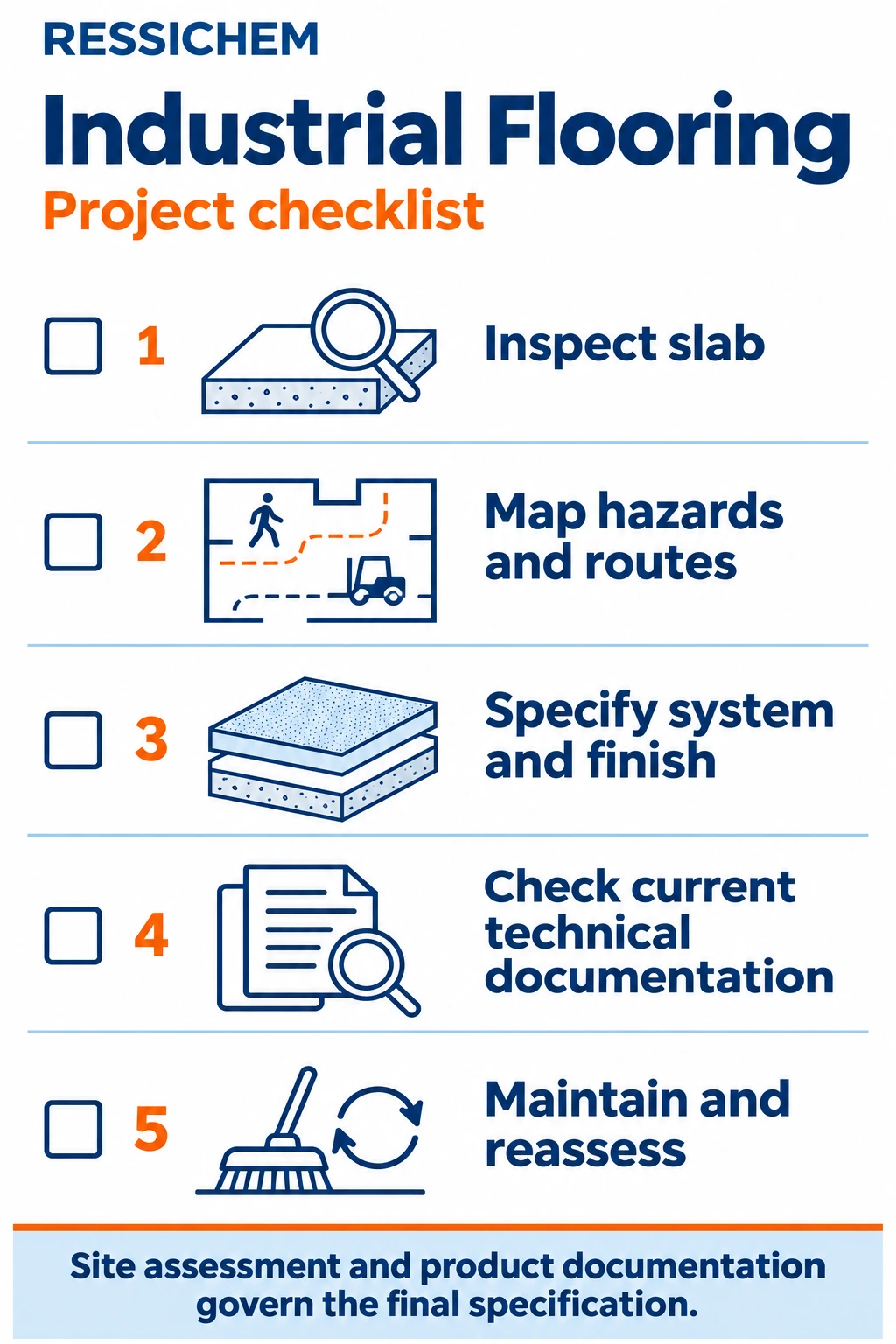
Five checks before specifying a safety-focused epoxy floor
1. Inspect the existing slab
Check soundness, contamination, moisture and previous coatings. Assess cracks and movement joints rather than covering them without a repair and detailing plan. Poor substrate preparation can undermine the finished system.
2. Map people, vehicles and contaminants
Separate dry pedestrian routes from locations with washdown water, oils, powders or frequent vehicle turning. Include ramps, thresholds, loading areas and places where workers change direction.
3. Choose the complete system and finish
Specify preparation, primer, any build coat and the selected finish as a compatible system. Select texture, colour and markings for the actual zone. A product name or attractive photograph is not a substitute for a site-specific floor specification.
4. Check documentation and installation conditions
Review current technical and safety data sheets for the chosen products, including substrate requirements, permitted application conditions, curing, chemical exposure and maintenance guidance. Confirm any slip-performance requirement with the project team and obtain evidence for the installed finish where needed.
5. Maintain the finished floor
Remove spills promptly, use the approved cleaning method and inspect walkways, joints, edges and turning areas for wear or damage. Reassess the floor when the process, chemicals or traffic changes. The intended safety performance depends on continued housekeeping as well as the original specification.
What an epoxy coating cannot do on its own
No floor finish can prevent every slip, eliminate spills or replace traffic controls, suitable footwear and cleaning. A smooth surface may be unsuitable where it is regularly wet. Persistent substrate moisture, severe thermal exposure or aggressive chemicals can also require a different specification or another flooring material.
Special requirements such as electrostatic control, food processing hygiene or particular chemical resistance need their own verified design criteria. A general-purpose epoxy floor should not be presented as certified for those uses without the relevant system evidence.
Explore the right Ressichem flooring route
Ressichem’s epoxy flooring solutions hub groups systems by application and duty. Use it with current product documentation and a site assessment to discuss the floor’s traffic, spill exposure, traction and maintenance needs. The epoxy floorings and coatings range provides product options, but the complete build-up should be confirmed for the project.
For a broader introduction to system selection, see the guide to epoxy flooring for industrial use. If your main concern is forklifts, storage and factory traffic, read the factory and warehouse flooring guide. To discuss a specific workspace, contact Ressichem with the slab condition and an outline of the hazards in each floor zone.